Source Deep Hole Gun Drill Bits for Metal PCB and General Drilling
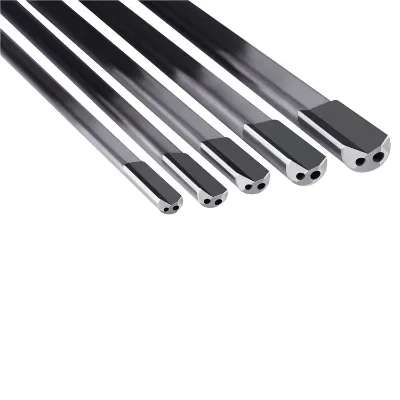
Compare 30 deep hole gun drill bits from verified suppliers. These tools feature solid carbide construction, waist cooling holes, and customizable models like CY103 for metal drilling, PCB drilling, and general hole machining applications.
Key considerations
Products List




Comprehensive Sourcing Guide
Strategic Sourcing Guide for Deep Hole Gun Drill Bits
Understanding the Technical Landscape of Gun Drill Technology
The procurement of deep hole gun drill bits requires a precise understanding of the specific geometry and material science that distinguishes them from standard drilling tools. Based on current market observations, the core product category is defined by the "Gun Drill Bit" type, often manufactured from solid carbide or tungsten carbide materials. These tools are engineered for high-precision hole-making operations where depth-to-diameter ratios are significant. The observed product specifications indicate a distinct aperture range spanning from 0.500mm to 12.001mm, suggesting that buyers must align their hole diameter requirements strictly within these parameters to ensure tool availability.
A critical technical differentiator for these tools is the chip groove design. The data highlights a specific "350mm" chip groove dimension, which is essential for the evacuation of chips during the drilling process. In deep hole applications, chip removal is the primary failure mode; therefore, the geometry of the flute or groove directly impacts the tool's ability to maintain a straight hole and prevent breakage. Furthermore, the cooling mechanism is integral to performance. The "Waist Cooling Hole" design is a notable feature observed in the supply base, indicating a specialized internal coolant delivery system that targets the cutting edge directly to manage heat and lubricate the cutting zone.
Buyers must also distinguish between the various length profiles available. The market offers both "Taper-length" and "Stub-length" variants. The selection between these depends heavily on the rigidity required for the specific machine setup and the depth of the hole being drilled. Stub-length bits generally offer higher rigidity for shorter, deeper holes, while taper-length options may be preferred for specific machine spindle configurations or extended reach applications. Additionally, the product type is not monolithic; the supply base includes "Indexable Drill Bit" and "Core Drill Bit" variations alongside the primary gun drill bits, as well as "BTA Drill Head" configurations. This diversity necessitates a clear definition of the drilling method (BTA, BTA, or single tube) before initiating a sourcing request.
Material Composition and Coating Specifications
The longevity and cutting efficiency of gun drill bits are fundamentally tied to their material composition and surface treatments. The predominant material observed in the current product listings is "Solid Carbide" or "Tungsten Carbide." This material choice is standard for high-performance drilling due to its hardness and wear resistance, allowing for higher cutting speeds compared to high-speed steel alternatives. The "Processable Materials" attribute is listed broadly as "All Kinds of Materials," which implies versatility; however, buyers should verify the specific hardness and abrasiveness of the workpiece material to ensure the carbide grade selected is appropriate for the intended application, whether it be metal drilling or PCB drilling.
Surface finishing and coating play a pivotal role in tool life and chip flow. The available finish options include "Black Oxide," "Zinc," and "Plain" surfaces, with the specific coating often being "Based on Requirements." This indicates a high degree of customization where the supplier can apply specialized coatings to enhance performance. For instance, a "Coating ?" attribute marked as "Yes" suggests that coated variants are available, which can significantly reduce friction and increase heat resistance. Buyers should explicitly request coating details relevant to their machining environment, such as TiAlN or other hard coatings, rather than relying on the default "Plain" or "Black Oxide" finishes unless the application is low-speed or non-critical.
The color of the tool is another observable attribute, with listings showing "White or Black" or "Customized Color" options. While color is often an aesthetic or identification marker, it can sometimes correlate with specific coating types or heat treatment processes. In a professional procurement context, the focus should remain on the functional properties of the coating rather than the visual appearance. The "Insert Method" is noted as "Replaceable" for certain indexable variants, which offers a cost-saving advantage by allowing the replacement of the cutting edge without discarding the entire tool body. This is particularly relevant for "Iscar or China Made" inserts, where the availability of high-quality replaceable inserts can dictate the total cost of ownership.
Compliance, Standards, and Certification Verification
Navigating the compliance landscape for industrial tooling requires careful verification of standards and certifications, as the market data presents a mix of specific and vague standard references. One listing explicitly cites "DIN" as a standard, while another states the standard is "size" or requires an "enquiry us." This discrepancy highlights a critical risk for buyers: not all products in the catalog may adhere to international dimensional standards. Buyers must verify that the product dimensions, specifically the aperture range and shank diameters, conform to the relevant DIN or ISO standards required by their machinery and tool holders.
The "prod_standard" field often defaults to "enquiry us," which serves as a red flag for standardized procurement. This suggests that the supplier may not have pre-defined standard specifications for every SKU and expects the buyer to negotiate the technical parameters. In such cases, the buyer must demand a detailed technical drawing or specification sheet that confirms compliance with their internal quality standards. Relying on a generic "size" standard is insufficient for high-precision applications where tolerances are tight.
Furthermore, the origin of the product is a key factor in compliance. The supply base is predominantly located in "China," with specific mentions of "Guangdong" and "Dezhou." While these regions are major manufacturing hubs, the lack of specific certification data in the provided facts means buyers cannot assume compliance with international quality management systems like ISO 9001 without direct confirmation. The "Standard" attribute is sometimes listed as "DIN," but this should be treated as a potential capability rather than a guaranteed attribute for every item. Procurement teams must include a clause in their requests for quotation (RFQ) that mandates the supplier to provide proof of compliance with the specific standards required for the application, whether it be automotive, aerospace, or general manufacturing.
Cost Drivers and Pricing Dynamics
The pricing structure for gun drill bits is influenced by several variables, including material grade, customization level, and order volume. The observed price range in the market spans from $0.50 to $800.00 USD. This wide variance is not indicative of a single product line but rather reflects the spectrum from small, standard indexable inserts to large, custom-manufactured solid carbide gun drill bits. The lower end of the range likely corresponds to standard, off-the-shelf components or smaller diameter bits, while the upper end reflects complex, custom-engineered tools with specialized coatings or unique geometries.
A significant cost driver is the "Customization" attribute. The market data confirms that customization is "Available" and that the product can be "Customized" to specific requirements. This includes custom lengths, specialized contour profiles available on special request, and tailored coating applications. Customization inevitably increases the unit cost and may impact the Minimum Order Quantity (MOQ). The observed MOQ range is 1 to 10 units, suggesting that while some standard items can be purchased in single units, custom orders may require a higher volume to justify the setup and engineering costs.
Payment terms are another financial consideration, with "T/T" (Telegraphic Transfer) being the standard method observed. Buyers should be prepared for this payment structure and negotiate terms that align with their cash flow, especially for large custom orders. The "Selling Units" are listed as "Single item," which offers flexibility for low-volume testing but may not be cost-effective for high-volume production runs. When evaluating the total cost of ownership, buyers must consider not just the purchase price but also the "Longer Working Life" feature observed in some listings. A higher initial cost for a tool with extended life can result in significant savings over time by reducing downtime and tool change frequency.
Typical Applications and Operational Scope
The operational scope of gun drill bits is defined by their intended usage, which ranges from general metal drilling to specialized PCB drilling. The "Usage" attribute explicitly lists "Metal Drilling" and "PCB Drilling," indicating that these tools are versatile enough to handle both ferrous and non-ferrous metals as well as composite materials used in electronics. The "Feature" of "Longer Working Life" is particularly relevant for high-volume production environments where tool consistency and reliability are paramount.
The "Product name" is broadly categorized as "Gundrill Bits," but the specific applications can vary based on the "Type" and "Model." For instance, the "CY103," "CY102," "CY112," "CY114," "CY104," and "CY116" models represent different configurations that may be optimized for specific industries. The "BTA Drill Head" attribute suggests suitability for BTA (Boring and Trepanning Association) drilling systems, which are commonly used in heavy machinery and automotive manufacturing for large-diameter deep holes.
Buyers should also consider the "Chip Groove" and "Cooling Hole Design" when selecting tools for specific applications. The 350mm chip groove and waist cooling hole design are critical for applications involving long, continuous drilling where chip evacuation and heat dissipation are challenging. In PCB drilling, the precision of the aperture and the rigidity of the tool are more critical than the depth, whereas in metal drilling for automotive or aerospace components, the depth-to-diameter ratio and coolant delivery become the primary performance metrics. Understanding these application nuances ensures that the selected tool matches the operational demands of the specific manufacturing process.
Supplier Evaluation and Quality Control Protocols
Evaluating suppliers for gun drill bits requires a rigorous assessment of their capabilities beyond the basic product listing. The "Customized support" attribute, which includes OEM, ODM, and OBM, indicates that suppliers can offer various levels of partnership, from private labeling to full design and manufacturing services. Buyers should prioritize suppliers who demonstrate a robust capacity for OEM and ODM support, as this often correlates with better quality control and technical expertise.
Quality control should be a central component of the supplier evaluation process. Given the "prod_standard" variability, buyers must establish clear acceptance criteria before placing an order. This includes verifying the "Material" consistency, ensuring the "Coating" is applied correctly, and confirming that the "Aperture Range" meets the specified tolerances. The "Place of origin" being "Guangdong, China" or "Dezhou" suggests a concentration of manufacturing in these regions, but it does not guarantee uniform quality. Buyers should request samples for testing, specifically focusing on the "Feature" of "Longer Working Life" and the "Insert" quality, whether it is "Iscar or China Made."
Packaging is another aspect of quality control that can impact the condition of the tools upon arrival. The observed "prod_packing" options include "Wooden Pallet and Wooden Case" as well as "International Express" packaging. For high-precision tools like gun drill bits, the wooden case option is generally preferred as it offers superior protection against damage during transit. Buyers should explicitly request wooden case packaging for custom or high-value orders to minimize the risk of damage.
Long-Term Procurement and Strategic Considerations
Long-term procurement of gun drill bits involves more than just transactional purchasing; it requires a strategic approach to inventory management, supplier relationships, and technology evolution. The "Model" attribute, which includes both specific codes like "CY103" and generic terms like "Customized," suggests that buyers should aim to standardize their tooling where possible to leverage volume discounts and simplify inventory. However, the "Special Contour Profile" being available on special request indicates that customization will remain a necessary part of the procurement mix for unique applications.
Buyers should also consider the "Payment Term" of "T/T" in the context of long-term contracts. Negotiating favorable payment terms based on volume commitments can improve cash flow and strengthen the supplier relationship. Additionally, the "Brand name" "DH" and the "Insert" options (Iscar or China Made) suggest that buyers should evaluate the availability of spare parts and inserts. A supplier that offers high-quality replaceable inserts ensures that the tooling system remains sustainable and cost-effective over time.
Finally, the "Processable Materials" being listed as "All Kinds of Materials" should be treated with caution. While the tool may be capable of drilling various materials, the optimal performance will depend on the specific carbide grade and coating selected. Buyers should work with suppliers to develop a material-specific tooling strategy, ensuring that the correct combination of material, coating, and geometry is used for each application. This strategic approach will maximize tool life, minimize downtime, and ensure consistent hole quality across the production line. By focusing on these long-term considerations, buyers can build a resilient and efficient supply chain for their deep hole drilling needs.
FAQs
What materials are used for deep hole gun drill bits?
Deep hole gun drill bits are primarily manufactured from solid carbide or tungsten carbide materials. These materials provide the necessary hardness and wear resistance for high-precision drilling operations in various metal types.
Can these drill bits be customized for specific needs?
Yes, customization is available for length, contour profiles, and coating requirements. Buyers can request special designs such as taper-length or stub-length variants to match their specific machine setups and hole depth requirements.
Which cooling hole designs are available for these bits?
The observed products feature a waist cooling hole design for effective heat management. This internal coolant delivery system targets the cutting edge directly to ensure efficient chip evacuation and prevent tool breakage during deep hole drilling.
How large is the aperture range for these drill bits?
The aperture range for these products spans from 0.500mm to 12.001mm. Buyers must ensure their required hole diameters fall strictly within these parameters to guarantee tool availability and proper fit for their drilling applications.
What is the minimum order quantity for purchasing these bits?
The minimum order quantity ranges from 1 to 10 units depending on the specific product. Standard items may be purchased as single units, while custom orders often require higher volumes to justify the engineering and setup costs.
Where are these deep hole gun drill bits manufactured?
These products originate from China, with specific manufacturing hubs located in Guangdong and Dezhou. Buyers should verify the specific factory location and compliance standards when sourcing for high-precision industrial applications.